Wood vs. Composite Decks: How to Choose for Your Missouri Home
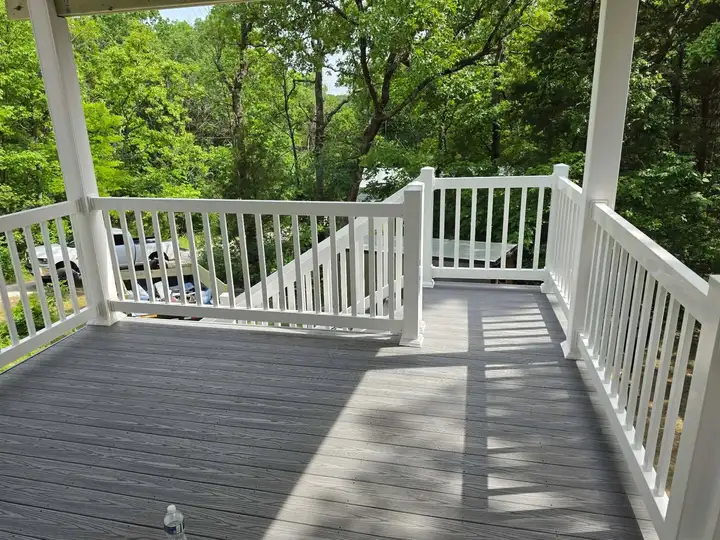
Choosing between wood decks and composite decks is one of the first decisions you will make when planning a new deck in Union, Washington, Wildwood, or anywhere in eastern Missouri. Both can look great and last for years. The right choice depends on how much upkeep you want, how you will use the deck, and what you want to spend up front.
How Wood Decks Hold Up
Pressure-treated wood is the most common decking material for a reason. It is widely available, straightforward to build with, and costs less up front than composite. A well-built wood deck gives you a warm, traditional look that suits most homes.
The trade-off is maintenance. Wood is exposed to sun, rain, and freeze-thaw cycles, so it needs to be cleaned and sealed or stained on a regular schedule to keep it from weathering, checking, and splintering. Skip that upkeep and the boards will gray and crack sooner.
Wood is also easy to repair. A damaged board can be swapped out without much trouble, and the whole surface can be refinished to change its color later.
How Composite Decks Hold Up
Composite decking is made from a blend of wood fibers and plastic, and most products today come with a protective outer shell. The main appeal is low maintenance. You will not sand, seal, or stain composite. Occasional washing keeps it looking clean.
Composite holds its color and resists splintering, which matters if you have kids or pets running around barefoot. It also comes in a range of colors and grain patterns, so you can match the look of your home without committing to future refinishing.
The trade-off is the higher price of the material. Composite boards can also run warmer in direct afternoon sun than wood, so lighter colors are worth considering for a deck with full sun exposure.
Compare the Long-Term Picture
The real comparison is not just the price of the boards. It is the price of the boards plus the time and money you spend maintaining them over the years you own the home.
If you plan to stay for a long time and want to spend weekends using the deck rather than working on it, composite often makes sense. If you want the lowest starting cost and do not mind regular staining, wood is a solid choice.
The Frame Matters More Than the Boards
Whatever you put on top, the structure underneath decides how long the deck lasts. Composite decks are typically built on a pressure-treated wood frame, so both options depend on the same thing: proper footings, a correctly attached ledger board, and joists that are spaced and supported the right way.
A deck that is fastened poorly to the house or built on undersized footings can sag, pull away, or fail no matter how good the decking looks. This is why we put the same care into the framing that we put into the surface you see.
Consider How You Will Use the Space
Think about the deck's job. A ground-level deck off the back door, a second-story deck with stairs to the yard, or a large deck wrapped around a pool all bring different needs. Elevated designs need well-planned stairs and railings. Pool decks see constant water and foot traffic.
Railings are another choice to make. Wood, vinyl, and metal railings each change the look and the upkeep, and you can mix a composite surface with a different railing style to get the look you want.
Baser Construction builds custom wood and composite decks for homeowners across Franklin County and west St. Louis County. Whether you need a contractor in Eureka, MO or a build closer to Union, we will look at your yard, talk through how you plan to use the space, and lay out the real trade-offs so you can choose with confidence. Call us or request a free quote to start planning your deck.
Ready to get started? Contact Baser Construction.